
Welcome to the Martin Zenke Lab. We are part of the Faculty of Medicine of RWTH Aachen University and RWTH Aachen University Hospital Aachen, Germany. The Martin Zenke Lab is affiliated with the Department of Medicine IV, Hematology, Oncology and Stem Cell Transplantation, RWTH Aachen University Medical School, Aachen, Germany.
News

About Martin Zenke
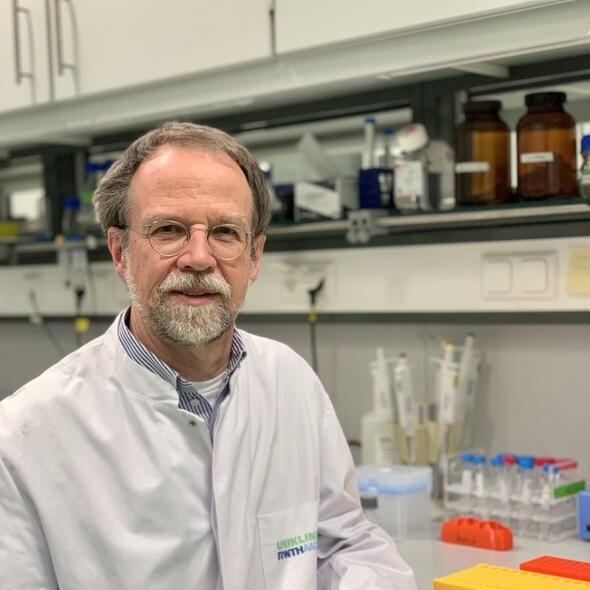
Martin Zenke, PhD is a Professor of Cell Biology (Biosketch; CV) who leads the group since April 2022 after retiring from the position as director of the Institute for Biomedical Engineering – Cell Biology, Faculty of Medicine of RWTH Aachen University in March 2022.
Research
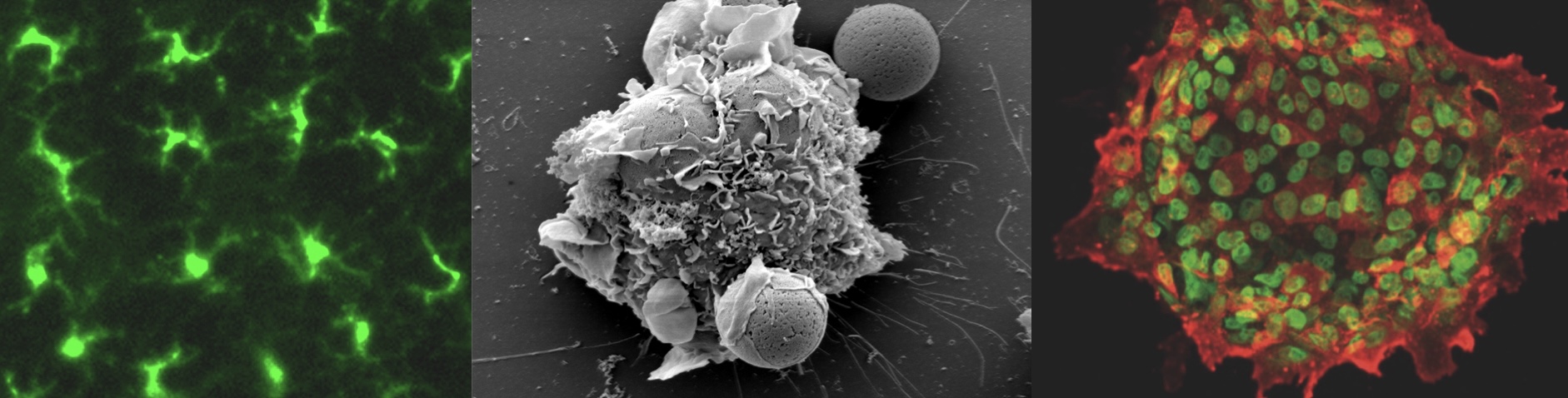
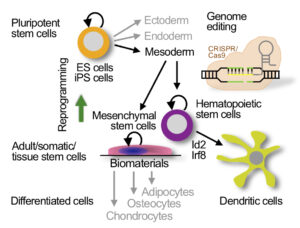
The Martin Zenke Lab studies stem cells. Hematopoietic stem cells are differentiated into a large array of cell types with a focus on antigen presenting dendritic cells. The lab also studies induced pluripotent stem cells (iPS cells) and employs CRISPR/Cas editing for generating cells with desired properties. Patient and disease specific iPS cells are differentiated e.g. into hematopoietic stem cell, mesenchymal stem cells, dendritic cells, mast cells and megakaryocytes and used for disease modelling and compound screening.
Stem Cells
In multicellular organisms, specific stem cell types with distinct developmental potentials occur during life. Pluripotent stem cells are generated during early embryonic development and differentiate into derivatives of all three germ layers. Adult stem cells, developing at later stages, are more restricted in their potential and differentiate into cells of only one stem cell system. Adult stem cells occur in all tissues of the adult organism and are important for lifelong tissue homeostasis and repair.
Antigen Presenting Dendritic Cells
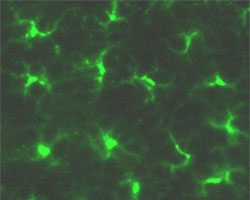
Antigen presenting dendritic cells (DC) are immune cells with a central role in immunity and tolerance. DC sense antigens, which are taken-up, processed and presented by MHC molecules to elicit T cell responses. Specific DC subsets differ in surface phenotype, function, activation state and anatomical localization, including classical DC type 1 and 2 (cDC1 and cDC2, respectively), plasmacytoid DC (pDC) and Langerhans cells (LC), the cutaneous contingent of DC in epidermis.